
Cable, U-lock, chain or folding: what each one actually resists

Cable, U-lock, chain or folding: what each one actually resists
There is no lock that cannot be defeated. What a lock buys is time and noise, and different designs buy those against different tools. Choosing well means matching the design to how and where you park.
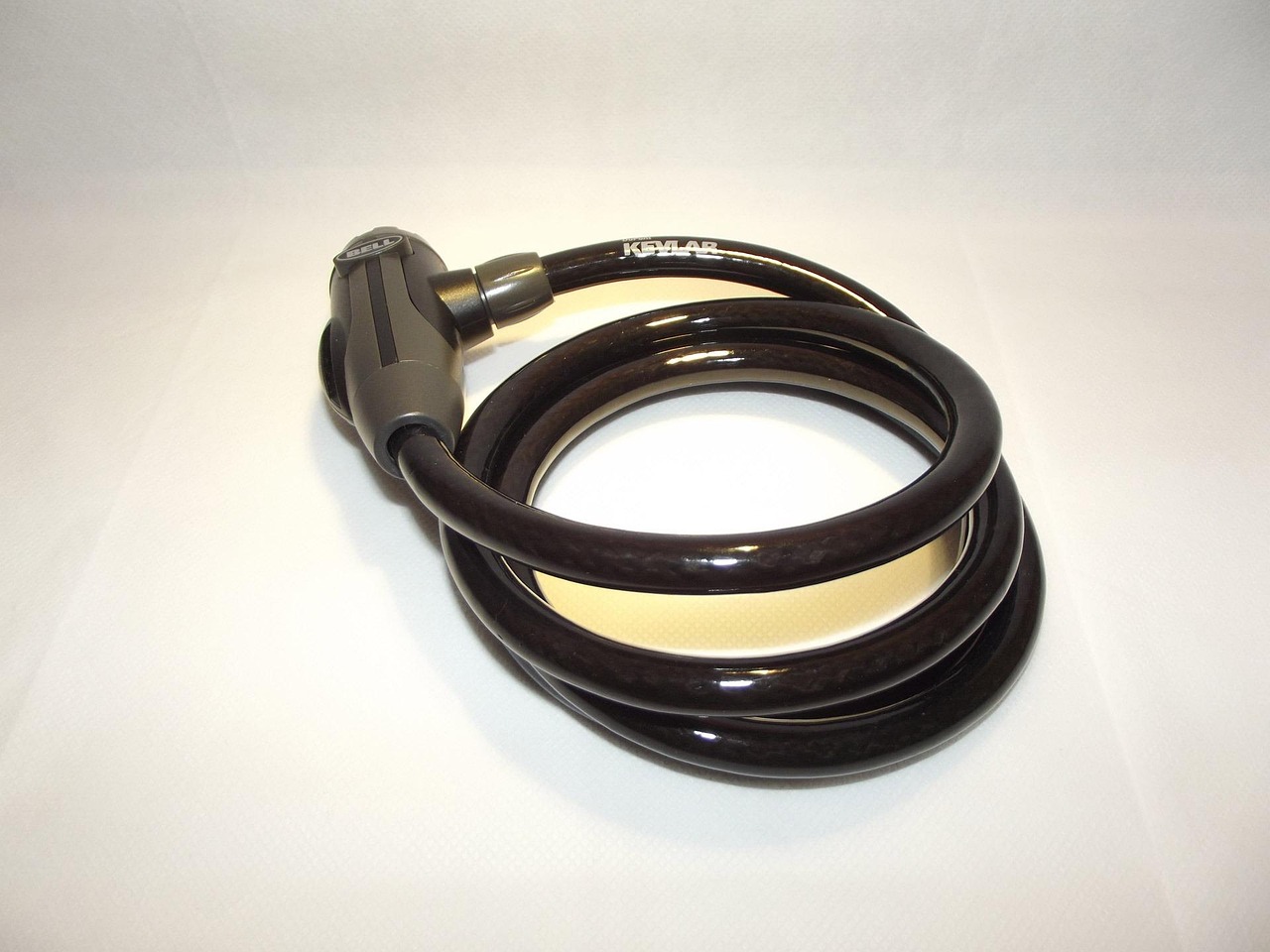
Cable locks
Braided steel cable in a plastic sleeve, usually with a combination or a small key cylinder.
Resists: opportunistic theft — someone walking off with an unsecured bike.
Does not resist: cable cutters. A standard cable is cut in seconds with hand tools that fit in a jacket.
Genuinely useful for: a two-minute stop where the bike is in sight; securing a helmet or a wheel to a bike already locked with something stronger; locking a scooter inside a building.
Cable locks get a bad name because they are sold as primary security. As a secondary lock they are sensible and light.
U-locks (D-locks)
A hardened steel shackle and a crossbar.
Resists: bolt cutters and levering, because there is very little space to get a tool in. A small U-lock leaves almost no gap for a jack or a pry bar.
Weakness: angle grinders, like everything else, and being locked to something that can itself be cut or lifted over.
Best for: daily commuting and street parking. The best security-to-weight ratio of the four.
Buy the smallest one that reaches what you need to lock. A large U-lock is more convenient and gives a thief more room to work.
Chain locks
Hardened links in a fabric sleeve, with a separate padlock or an integrated lock.
Resists: bolt cutters, if the links are hardened and thick enough — 10 mm and above. Very flexible about what you can lock to.
Weakness: weight. A serious chain is heavy enough that people stop carrying it.
Best for: overnight parking, home storage, and locking to awkward anchors. A chain that lives at your destination rather than on your back is the arrangement most people settle on.
Folding locks
Hardened steel plates riveted so they fold flat and open into a rigid loop.
Resists: bolt cutters well; the plates are hard to grip.
Weakness: the rivets are the target; a determined attack focuses there.
Best for: riders who want more reach than a U-lock and less weight than a chain. They carry neatly in a frame bracket, which is why commuters like them.
Reading the ratings
Independent testing is more useful than a manufacturer’s own scale. Sold Secure ratings — Bronze, Silver, Gold, Diamond — describe how long a lock resisted a defined attack. Gold is the usual benchmark for a bike parked in a city, Diamond for high-value bikes.
A manufacturer’s own 1-to-10 security number is not comparable between brands.
The rule of thumb on spending
Roughly 10% of the bike’s value on the lock, and more if it is parked outside overnight. On an e-bike that costs two thousand dollars and lives on South Broad Street, a twenty dollar cable is not a decision, it is a donation.
The best arrangement
Two locks of different types. A thief carrying bolt cutters cannot defeat a U-lock; a thief with a jack cannot easily attack a chain. Two designs means two tools, and most opportunists carry one.
Come and handle them
Weight is the factor people misjudge from a description. Pick up a 10 mm chain and a folding lock at the counter and you will immediately know which one you would actually carry every day — and the lock you carry is the only one that protects anything.
Weight, and the lock you will actually carry
The security rating on the box is only half the decision. A Diamond-rated chain that weighs nine pounds is a lock that stays at home on a warm day, and a lock at home protects nothing.
Rough figures worth knowing: a compact U-lock is two to three pounds, a folding lock about two and a half, a serious hardened chain five to ten. If your commute is short and mostly flat, the chain is viable. If you carry the bike up stairs, it is not.
The realistic answer for many riders is a U-lock carried daily plus a heavy chain that lives permanently where the bike is parked overnight — at home, or at work.
Frame mounts
A lock with a frame bracket is carried more often than one that has to go in a bag. Check the bracket fits your frame — a mount designed for a round tube will not clamp an aero or a heavily shaped e-bike downtube.
Also check it does not rattle. A lock that clatters over every bump is a lock people stop taking with them.
Angle grinders, honestly
A cordless angle grinder defeats every lock sold to consumers, in times measured in tens of seconds to a couple of minutes. Some newer locks use hardened composite or rotating cores that slow a grinder down noticeably; none stop one.
What defends against a grinder is not the lock but the situation: a busy, lit, overlooked location, and a bike that is not the easiest one on the rack.